Showing posts with label Software Development. Show all posts

Monday, 12 August 2019

Mobile Programming Languages - Which One Is Right For Your App Design/Development

So you want to make a mobile app. One of your greatest considerations is going to be the back-end; specifically choosing a programming language that’s right for your vision and application. As a leading mobile app developer, us here at Codal would like to profile some of our favorite mobile programming languages in hopes of leading you and your app towards one that’s the perfect fit.
Kotlin
Looking to develop an Android application? Look no further than Kotlin. This statistically typed programming language an ideal fit for developing Android apps. Production-ready, Kotlin is modern and expressive, safe, and interoperable.
411Modern and expressive code means developers can express their ideas in full without the need to write a lot of boilerplate code. And when isn’t safety desirable? Safer code only improves the quality of your app. Lastly, Kotlin is 100% interoperable with Java.
These are but a few of the compelling reasons why Kotlin is perfect for an Android mobile app developer. Likewise, Codal loves working with Kotlinfor mobile app design and development.
Swift
iPhone or iPad? Swift is the programming language to develop an application for either of these two devices as they run on iOS.
412With Swift code you can create an entirely new app from scratch or you can incorporate new functionality and features into a pre-existing application. That being said, Swift is interoperable with Objective-C.
Swift is expressive. Features making this possible include easy to use Generics, functional programming patterns (like map and filter), and enums that allow for payloads and pattern matching.
Additionally, Swift is exceptionally fast as it has speed advantages during iOS application development.
Swift isn’t going anywhere. This programming language is only gaining traction. Some of the biggest companies are using Swift to build and maintain, even rebrand their mobile apps. Likewise, industry leaders in mobile app development, like Codal, are Swift experts.
Conclusion
413Starting an app from scratch or modifying a pre-existing app requires time and attention to the back-end programming language. This is easier said than done and oftentimes requires help.
Maybe you need help with eCommerce mobile app development or healthcare mobile app development, even logistics mobile app development. Regardless of the type of app you’re creating, we here at Codal know how to design and develop it. Get in touch with us today!

Friday, 9 August 2019

Database Management Systems 101

What is a database? Why do businesses need databases?
Best put by Oracle, “A database is an organized collection of structured information, or data, typically stored electronically in a computer system.” Storing, managing, and retrieving information is made possible via a database. And although databases contain tables and columns, they are not spreadsheets.
11111
Databases make things easier for businesses. More specifically, a database can, but is not limited to doing the following for a business:
  • Track inventory
  • Prepare for growth
  • Manage customer information
  • Payroll management
  • Analyze business data
What is a database management system? And why do businesses need one?
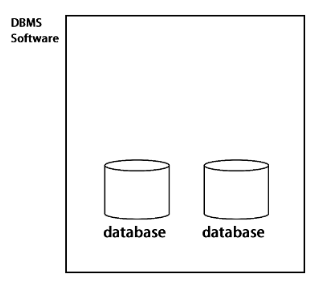
Put simply, a database management system manages databases. It is a software that is installed in order to manage three important things:
  • Data
  • Database engine, which allows data to be accessed, modified, and locked
  • Database schema (defines the logical structure)
Database management systems provide concurrency, data security, data integrity, and a way to make administrative procedures uniform.
111111
Many enterprises have more than one database management system, depending on the type of data in need of handling.
Relational Database Management System
A relational database management system consists of data items with previously defined relationships between them. Important elements of a relational database management system include Structured Query Language (SQL), data integrity, transactions, and the ability to be Atomic, Consistent, Isolated and Durable (ACID).
Examples of relational database management systems include MySQL and PostgresSQL. And as a full-stack digital agency, we here at Codal are experts in regard to these two database management systems. Codal creates the reliable and intelligent digital tools so accessing and
managing relational databases is easy. We do this via our MySQL and PostrgresSQLtechnologies.
Graph Database Management System
1111111A graph database management system operates under the idea that the relationship between the data is as important as the data itself. No predefined models for data.
A popular graph database management system is that of Neo4J. Used by many major companies, we here at Codal know how to use and work with this staple of a software.
Conclusion
The bigger the business, the more data. And as such, the need for a database and a database management system exists. However, sometimes incorporating these two elements isn’t easy. Let us here at Codal do the hard work for you and your business, experts in database technologies.

Thursday, 25 July 2019

goHow To Eliminate eCommerce Cart Abandonment On Mobile

Every industry has its Achilles heel and for eCommerce that pain point is cart abandonment. Although the cart abandonment average is at 69%, there are solutions to combating this problem. Here at Codal, we know all about shopping cart abandonment solutions.
240
And while cart abandonment happens on all platforms (i.e. web, tablet, etc.), it happens more on mobile, specifically at a rate of 81%. Whether customers are shopping on apps like Instagram, or shopping on their phones within a web browser, specific attention must be given to various aspects of the mobile experience as to eliminate cart abandonment.
Below are some elements to pay attention to when addressing mobile cart abandonment, as well as their corresponding solutions, courtesy of Codal, an eCommerce mobile app development company!
“Save” Feature
Call it a “wishlist”, a “bookmark,” whatever! Mobile eCommerce demands a feature that allows users to save the items they wish to buy. Although a great bulk of eCommerce occurs on mobile, many users, while they start on mobile, complete their transactions elsewhere.
Many users are deterred by the small screens when participating in final stages of mobile transactions. By providing a feature where customers can save their items and pick up where they left off with the purchase, you’re accommodating user needs, as well as securing sales.
241
Design User Friendly Text Fields
Given the size of a mobile screen, the importance of text fields is paramount. They can make or break your mobile eCommerce, so much so that they may be the catalyst for shopping cart abandonment if not designed and developed well.
Users get confused easily and lose their patience even quicker.
Be sure to use simple and concise language. No ambiguous wording and avoid being at all verbose.
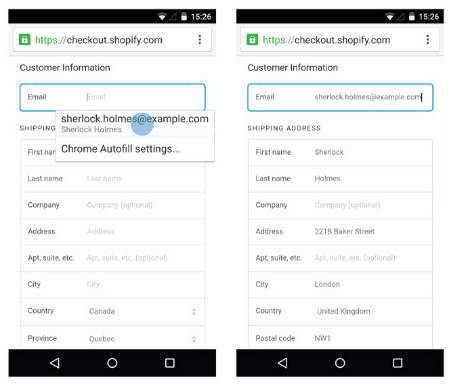
Given users desires for immediacy, implement automation for text fields. First name, last name, email address, phone number, city, state, zip code, etc. can all be accommodated via autofilling text fields, which make things faster and easier for users. And thus makes them more inclined to complete purchases.
242
Guest Checkout
Don’t force users to create an account, especially on mobile. Allow users to checkout as a guest. 1 in 4 customers choose to leave an eCommerce transaction rather than make an account.
While having users create an account may enhance your SEO, it’s not worth losing sales in order to do so. Your customers want ease and efficiency. Don’t elongate the checkout process for them with the need to create an account. Keep guest checkout forms brief.
243
Conclusion
The above best practices are crucial when designing and developing a mobile platform that doesn’t facilitate shopping cart abandonment. It’s important to keep in mind that these best practices the byproduct of the needs and wants of users. If you’re wanting to uncover the needs and wants of your customers contact Codal, a leader in user experience research services. And based off those findings, consider working with an eCommerce website design and development company, like Codal!

Tuesday, 23 July 2019

It’s In (Almost) Every Industry - AI/Machine Learning

Once considered to be something in our wildest dreams, AI/machine learning is now a very real part of our everyday lives. AI/machine learning is currently in many industries and making its way into many more. But not everyone knows how exactly AI/machine learning is affecting businesses.
Wonder no more! Codal breaks down a few of the industries being transformed by AI/machine learning!
Finance
Banks and other financial businesses are using AI/machine learning for two main reasons: fraud prevention and data analyzation.
While fraud is rare, it can be very costly. And as data sets grow bigger, it’s even harder to detect fraud, but with AI/machine learning, it just got a little easier. This technology is capable of mining data and analyzing client profiles in order to garner potential signs of fraud.
Insights provided by AI/machine learning analyzed data include investment opportunities or suggestions for investors as to when they ought to trade. Data analyzation helps risk management, which requires identifying risks early on. And with AI/machine learning banks can recognize risky data patterns sooner rather than later.
Looking for an established agency with experience with both finance and AI/machine solutions? Look no further than Codal! For an insider look at our experience, checkout our Charles Schwab case study!
230
Retail/eCommerce
Retail websites are using machine learning in order to analyze your buying history and recommend products based on that data.
Machine learning is beneficial to eCommerce enterprises. For instance, this technology helps eCommerce enterprises make better data driven decisions, optimize processes, and identify new markets.
231AI/machine learning also helps create a more personalized custom experience. Likewise, this technology can predict customer service issues before they even occur.
And with 70% of eCommerce taking place via mobile best believe this technology is usable in that platform too!
Wanting to incorporate AI/machine learning into your eCommerce business? Get in touch with an eCommerce web development company and/or a eCommerce mobile app development company, like Codal!
Healthcare
232Digital transformation in healthcare is here! AI and machine learning has taken healthcare by storm! Healthcare AI is estimated to have a value of $6.6 billion by 2021 and save the U.S. healthcare industry $150 billion annually. These technologies are making significant strides for both healthcare professionals and patients.
AI is being used for medical diagnoses. For instance, Stanford University created an AI algorithm that identifies and diagnosis skin cancer. This technology is said to be available on mobile phones eventually. Likewise, Google’s parent company, Alphabet, has an AI in the works that uses high-level image recognition to detect metastasis.
In need of healthcare transformation solution? Contact Codal, experts in software development for healthcare, connected healthcare solutions, and more!
Conclusion:
Industries not included in this piece, but that are reaping the benefits of AI and machine learning include, but are not limited to, transportation, manufacturing, and government.
AI/machine learning isn’t going anywhere. That being said, take a step in the innovative direction and incorporate this wonderful technology into your business with a little help from Codal, experts in AI/machine learning.

Friday, 19 July 2019

Designing Platforms For Many User Types - 4 Best Practices

Its not at all realistic to assume you’ll only have a small handful of user types interacting with your platform. To combat this, you need to design a platform that will accommodate a variety of user types.
Below are what we here at Codal, a UX design company in Chicago, deem the best practices for designing platforms for various types of users.
Design Thinking
According to the Interactive Design Foundation, “Design thinking is a non-linear, iterative process which seeks to understand users, challenge assumptions, redefine problems and create innovative solutions to prototype and test.”
Begin design thinking via these steps:
  • Empathize: research and identify potential problems your users may face and design in empathetic accordance with your discoveries.
  • Define: gather and organize your findings from the previous stage. Analyze and draw conclusions in order to define problems.
  • Ideate: challenge your findings and assumptions in order to solve a variety of problems amongst a handful of different potential users.
  • Prototype: it’s time to experiment with solutions and prototypes as discovered in the previous three stages.
  • Test: don’t just think about these possible solutions, try them out!
220
Caption: Source
Personas
Make use of personas!
Personas are demonstrations of potential users in the real world. They help designers design for a variety of people and groups while still addressing individual needs. Personas are created via user research. (In search of user experience research services? Look no further than Codal!). They show the needs, wants, behaviors, etc., of who they’re representing.
221
Once your personas are created, give them some context: apply them to different scenarios. Scenarios will help designers understand user flows (see the following section), which is critical when designing for a variety of user types.
User Flows
User flows are a series of steps a user takes in order to achieve an objective. They communicate the intended sequence of steps that a user would go through within an application or website.
222
User flows put the user at the center of the design process by putting attention of the users needs and wants, demonstrating how users achieve an objective.
An example of success with user flows can be seen in Codal’s experience working with Showroom Squared.
Accessibility/Compliance
Designing for many types of users also includes developing a platform that is usable for those with disabilities. While this is certainly the ethical practice, it also one that is mandated by law. Make sure you site is ADA compliant!
223
Caption: Source
Web Content Accessibility Guidelines (WCAG) make designing your platform accessible easy! An example of a WCAG guideline includes consistent navigation. More specifically, for users with visual impairments or cognitive limitations, having a predictable site or application makes it usability easier if repeated components (like an expanding navigation menu) occur in an identical order.
Accessibility allows all types of users to enjoy websites and web applications across many platforms without jeopardizing the quality of the experience.
Conclusion:
You can’t make everyone happy, but you can make your platform usable for a variety of user types. Whether you’re in need of custom software development services, UX research services, or anything else necessary to develop your platform, Codal has you covered. Checkout out our technologies and solutions!

Tuesday, 16 July 2019

Edtech On The Rise - 5 Noteworthy Innovations 2019

With the ever increasing advent of technological solutions and innovations, across many disciplines and industries, it’s of no surprise that the rise of educational technology is among us. And it’s not going anywhere!
As an advocate for a more educated future, as well as being a leader in edtech solutions, us here at Codal would like to share our five favorite edtech innovations of 2019!
1) Livescribe Smartpens
Research has proven that handwritten notes contribute to better retention of information compared to typed notes. However, handwritten notes have a greater potential for getting lost, ruined, or eaten by your dog. Via a high-tech stylus, Livescribe eliminates these worries by digitizing them into PDFS, editable text files, and recorded audio. This impressive edtech is a product of Anoto.
2102) Handshake
With education, particularly higher education, comes the need to put your acquired knowledge and skills into practice within the context of a job. But finding a work that’s complimentary to your area(s) of study can be challenging. However, with Handshake students need not worry. Handshake is an online career network/platform that helps students find jobs/internships with the ability to do specific to their areas of study. Similar to LinkedIn, Handshake lets students build profiles that can be seen by companies (potential employers) who are connected to the platform.
2113) EDX: Free Online Courses by Harvard, MIT, & more
This is a non-profit online platform that aims to democratize learning. Managed by leading institutions in higher education, EDX provides free online courses; a concept, similar to open-source software, referred to as MOOC: Massive Open Online Courses. With great accessibility and the potential to be a tradition college education or continuing education supplement, EDX is an encouraging edtech development!
212
4) MATHia & MATHiaU
These two intelligent and responsive math-teaching softwares are an edtech must! MATHia is for grades 6th-12th and MATHiaU is higher education. Both softwares provide one-on-one tutoring, as well as personalized learning paths for math students. Math learning ought to be differentiated in delivery in order to solidify knowledge and retain understanding and that’s exactly what this software provides. These softwares are easy to use have aesthetically pleasing interfaces, and integrate seamlessly with Learning Management Systems (LMS) (essentially CMS specific to education), so school teachers and instructors can utilize the resource too! This software is a product of Carnegie Learning.
213
5) Remind
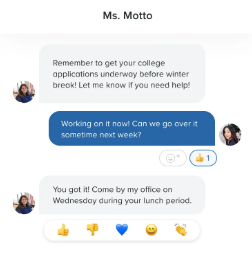
214Remind is a communication platform and mobile app designed to bring students, parents, and educators together. More specifically, Remind allows teachers and school administrators to communicate with parents and students via mobile all within the context of a neat platform. Additionally, this application integrates seamlessly with LMSs, like Canvas.
Conclusion
Edtech is the future of education. The possibilities are endless, with innovations ranging from hardware to software. Either way, developing said innovations requires solutions. Who better than to contact than Codal, an application development firm specializing in custom software development services.